I havent had a chance to watch this yet but it looks absolutely fascinating:
Tuesday, May 21, 2013


Monday, May 13, 2013
Dizzee Rascal - Goin' Crazy ft. Robbie Williams
Dizzee Rascal and Robbie Williams openly support Mega Upload.
Sunday, May 12, 2013
JBT Seed Grant
The John Butler Seed Grant is available for emerging musicians in Australia. There are a number of programs under which to apply including: Art on the Street, Professional Development, Money for Managers, and Publicise it. Skinny Fish, Bush Bands Business and Song Cycles Inbound Project. Take a look at the website for more information.
New TPP Petition
Open Media have a new petition against TPP. They state that TPP is the biggest threat to the Internet and threatens to criminalise the use of common websites including YouTube, Instagram, Facebook and even blogs.
"Normal online activities “could lead you to be cut off from the Internet, have your computer seized, be fined up to $150,000, or even land you in prison.”3This agreement threatens to rewrite national laws around the world. This is happening fast – twelve countries are already on board. A man named Michael Froman has just been appointed the U.S.’s new TPP chief negotiator.Michael Froman now has the unique ability to either put this secretive, global Internet criminalization plan to an end – or cement it into place for generations. Sign the petition to send him a messagenow, and share this with everyone!"
You can find the petition here - please sign it!
"Normal online activities “could lead you to be cut off from the Internet, have your computer seized, be fined up to $150,000, or even land you in prison.”3This agreement threatens to rewrite national laws around the world. This is happening fast – twelve countries are already on board. A man named Michael Froman has just been appointed the U.S.’s new TPP chief negotiator.Michael Froman now has the unique ability to either put this secretive, global Internet criminalization plan to an end – or cement it into place for generations. Sign the petition to send him a messagenow, and share this with everyone!"
You can find the petition here - please sign it!
Friday, May 10, 2013
Thursday, April 25, 2013


Sunday, April 21, 2013
Off The Grid
I've started a new job working at the Northern Rivers Conservatorium of Music, and am having a little time off this space at the moment. Should be back into things in a few weeks perhaps around mid May - hopefully sooner.
Sal
Sal
Wednesday, April 10, 2013
The Fair Use/Fair Dealing Handbook
Infojustice.org have released a free book called The Fair Use/Fair Dealing Handbook. It extracts the fair dealing/fair use provisions of over 40 countries in one handy pdf! It is licensed under a Creative Commons license, check it out here:
http://infojustice.org/wp-content/uploads/2013/04/Band-and-Gerafi-04032013.pdf
http://infojustice.org/wp-content/uploads/2013/04/Band-and-Gerafi-04032013.pdf
Wednesday, April 3, 2013
Defective by Design: W3C, DRM, HTML5
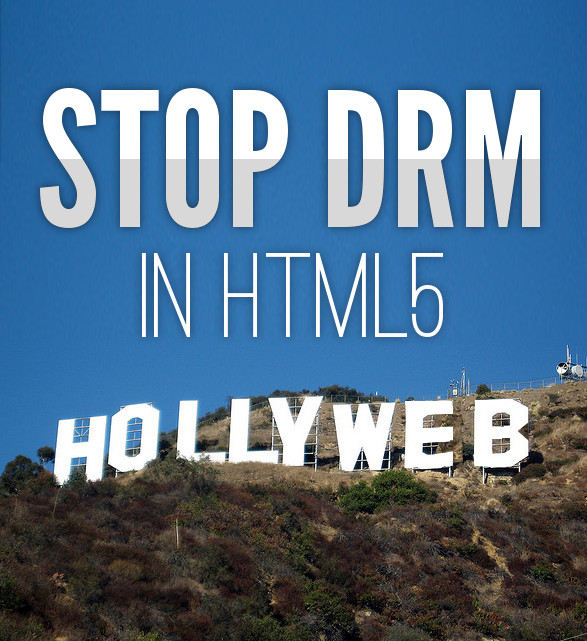
The 3rd May 2013 is the International Day against DRM. Defective by Design, a group from the Free Software Foundation, are asking people to mobilise and get involved in lobbying against the inclusion of DRM in HTML5. They state:
Hollywood is at it again. Its latest ploy to take over the Web? Use its influence at the World Wide Web Consortium (W3C) to weave Digital Restrictions Management (DRM) into HTML5 — in other words, into the very fabric of the Web. Millions of Internet users came together to defeat SOPA/PIPA, but now Big Media moguls are going through non-governmental channels to try to sneak digital restrictions into every interaction we have online. Giants like Netflix, Google, Microsoft, and the BBC are all rallying behind this disastrous proposal, which flies in the face of the W3C's mission to "lead the World Wide Web to its full potential."
We're not going to let this slip through under the radar. More than 9,200 people have already signed this petition to stop DRM in HTML5. Join them and help us build momentum to reach 50,000 signers by May 3rd, 2013, the International Day Against DRM. We'll drive the message home by delivering your signatures to the W3C (they're right down the street from us!) to make your voices heard.
Sign the petition here.
You can find out more about Defective by Design here and more about the issue from Electronic Frontiers Foundation here.
Friday, March 8, 2013
Six Strikes: Demand Progress
As I am sure many of you are aware, the USA recently introduced its Graduated Response Scheme for copyright infringement by which the major ISPs have agreed with the RIAA and MPAA to issue warning notices and ultimately to throttle accounts based on an accusation of infringement.
The Copyright Alert System commenced on 26 February 2013.The main components of the system are:
While, as a concept, this doesnt seem as bad as the Graduated Response Programs implemented in other countries such as New Zealand which involve only 3 warnings and the ultimate penalty of disconnection, given: the established crudeness of the investigation and detection methodologies and technologies (thus most likely leading to a number of false detections), and the removal of the process from a legitimate legal forum, there remain some serious problems with the concept. Recent reports indicate that all websites will be blocked by some ISPs after the fourth warning. In addition, downloads that could well be covered by the doctrine of fair use could easily be wrongly identified as infringing. Furthermore, some suggest that there will be an impact on internet cafes and others providing public access - Casey Rae of FMC suggests this is untrue with the scheme only relating to private not business accounts.
Interestingly, the IFPI have just released their annual report showing that music sales are up globally to a total of $16.5 billion (although it doesnt give details of the USA position independently) and states that 62% of Internet users access legal services.
Demand Progress have a petition running that is available for any concerned people to sign here. They write:
"With essentially no due process, AT&T, Cablevision Systems, Comcast, Time Warner Cable and Verizon will get on your case if you're accused of violating intellectual property rights -- and eventually even interfere with your ability to access the Internet. (You can contest accusations -- if you fork over $35.) After the first few supposed violations, they'll alert you that your connection was engaging in behavior that they -- the giant corporations that provide your Internet service -- deem inappropriate. And then it gets really dicey: They can make it difficult for you to access the web, or start throttling down your connection."
A voluntary collective licensing scheme remains a viable alternative and would see the free flow of culture and reasonable compensation returned to artists.
Further Information
Demand Progress, Tell ISPs: No "Six Strikes" <http://act.demandprogress.org/letter/six_strikes_2013/?akid=2037.2255202.3_xWZI&rd=1&t=3> at 8 March 2013
ZeroPaid, Music Industry Revenue Is Up (So Are Legal Downloads) (27 February 2013) <http://www.zeropaid.com/news/103269/music-industry-revenue-is-up-so-are-legal-downloads/?utm_source=feedburner&utm_medium=email&utm_campaign=Feed%3A+zeropaid+%28Zeropaid.com%29 > at 8 March 2013
ZeroPaid, “6-Strikes” Copyrights Alert System Goes Live (26 February 2013) < http://www.zeropaid.com/news/103259/6-strikes-copyrights-alert-system-goes-live/?utm_source=feedburner&utm_medium=email&utm_campaign=Feed%3A+zeropaid+%28Zeropaid.com%29 > at 8 March 2013
Australian Policy Online, IFPI digital music report 2013: engine of a digital world (26 February 2013) <
http://apo.org.au/research/ifpi-digital-music-report-2013-engine-digital-world > at 8 March 2013
Billboard, Guest Post: Will the Copyright Alert System Break the Internet (7 March 2013) <http://www.billboard.com/biz/articles/1550750/guest-post-will-the-copyright-alert-system-break-the-internet-by-future-of > at 8 March 2013
TechDirt, Comcast: We Won't Terminate Your Account Under Six Strikes; We'll Just Block Every Single Website (28 February 2013) < http://www.techdirt.com/articles/20130227/14231422143/comcast-we-wont-terminate-your-account-under-six-strikes-well-just-block-every-single-website.shtml > at 8 March 2013
ArsTechnica, Here’s what an actual “six strikes” copyright alert looks like (28 February 2013) < http://arstechnica.com/tech-policy/2013/02/heres-what-an-actual-six-strikes-copyright-alert-looks-like/> at 8 March 2013
The Copyright Alert System commenced on 26 February 2013.The main components of the system are:
- Alert
- Acknowledgement
- Education
- Mitigation (Throttling/Blocking)
While, as a concept, this doesnt seem as bad as the Graduated Response Programs implemented in other countries such as New Zealand which involve only 3 warnings and the ultimate penalty of disconnection, given: the established crudeness of the investigation and detection methodologies and technologies (thus most likely leading to a number of false detections), and the removal of the process from a legitimate legal forum, there remain some serious problems with the concept. Recent reports indicate that all websites will be blocked by some ISPs after the fourth warning. In addition, downloads that could well be covered by the doctrine of fair use could easily be wrongly identified as infringing. Furthermore, some suggest that there will be an impact on internet cafes and others providing public access - Casey Rae of FMC suggests this is untrue with the scheme only relating to private not business accounts.
Interestingly, the IFPI have just released their annual report showing that music sales are up globally to a total of $16.5 billion (although it doesnt give details of the USA position independently) and states that 62% of Internet users access legal services.
Demand Progress have a petition running that is available for any concerned people to sign here. They write:
"With essentially no due process, AT&T, Cablevision Systems, Comcast, Time Warner Cable and Verizon will get on your case if you're accused of violating intellectual property rights -- and eventually even interfere with your ability to access the Internet. (You can contest accusations -- if you fork over $35.) After the first few supposed violations, they'll alert you that your connection was engaging in behavior that they -- the giant corporations that provide your Internet service -- deem inappropriate. And then it gets really dicey: They can make it difficult for you to access the web, or start throttling down your connection."
A voluntary collective licensing scheme remains a viable alternative and would see the free flow of culture and reasonable compensation returned to artists.
Further Information
Demand Progress, Tell ISPs: No "Six Strikes" <http://act.demandprogress.org/letter/six_strikes_2013/?akid=2037.2255202.3_xWZI&rd=1&t=3> at 8 March 2013
ZeroPaid, Music Industry Revenue Is Up (So Are Legal Downloads) (27 February 2013) <http://www.zeropaid.com/news/103269/music-industry-revenue-is-up-so-are-legal-downloads/?utm_source=feedburner&utm_medium=email&utm_campaign=Feed%3A+zeropaid+%28Zeropaid.com%29 > at 8 March 2013
ZeroPaid, “6-Strikes” Copyrights Alert System Goes Live (26 February 2013) < http://www.zeropaid.com/news/103259/6-strikes-copyrights-alert-system-goes-live/?utm_source=feedburner&utm_medium=email&utm_campaign=Feed%3A+zeropaid+%28Zeropaid.com%29 > at 8 March 2013
Australian Policy Online, IFPI digital music report 2013: engine of a digital world (26 February 2013) <
http://apo.org.au/research/ifpi-digital-music-report-2013-engine-digital-world > at 8 March 2013
Billboard, Guest Post: Will the Copyright Alert System Break the Internet (7 March 2013) <http://www.billboard.com/biz/articles/1550750/guest-post-will-the-copyright-alert-system-break-the-internet-by-future-of > at 8 March 2013
TechDirt, Comcast: We Won't Terminate Your Account Under Six Strikes; We'll Just Block Every Single Website (28 February 2013) < http://www.techdirt.com/articles/20130227/14231422143/comcast-we-wont-terminate-your-account-under-six-strikes-well-just-block-every-single-website.shtml > at 8 March 2013
ArsTechnica, Here’s what an actual “six strikes” copyright alert looks like (28 February 2013) < http://arstechnica.com/tech-policy/2013/02/heres-what-an-actual-six-strikes-copyright-alert-looks-like/> at 8 March 2013
Subscribe to:
Posts (Atom)